
#1 Wednesday: Starting Over

I think I’m going to make these little essays, starting over, each a beginning again as if we just met. Imagine two children in the sandbox Children care about anomalies. They like to pull up their shirts and point. “See my rash! It’s all over my body. I look like I have leprosy!” All True. Children like excitement.
Now in the adult voice. Nothing’s changed with my long-term pain. Jerry picked up a new Rx for Oxycodone yesterday, had to wait in line forever, which I feel terrible about. He’s 86 and on the verge of not driving, and as long as I’m taking opioids, I’m not driving at all.
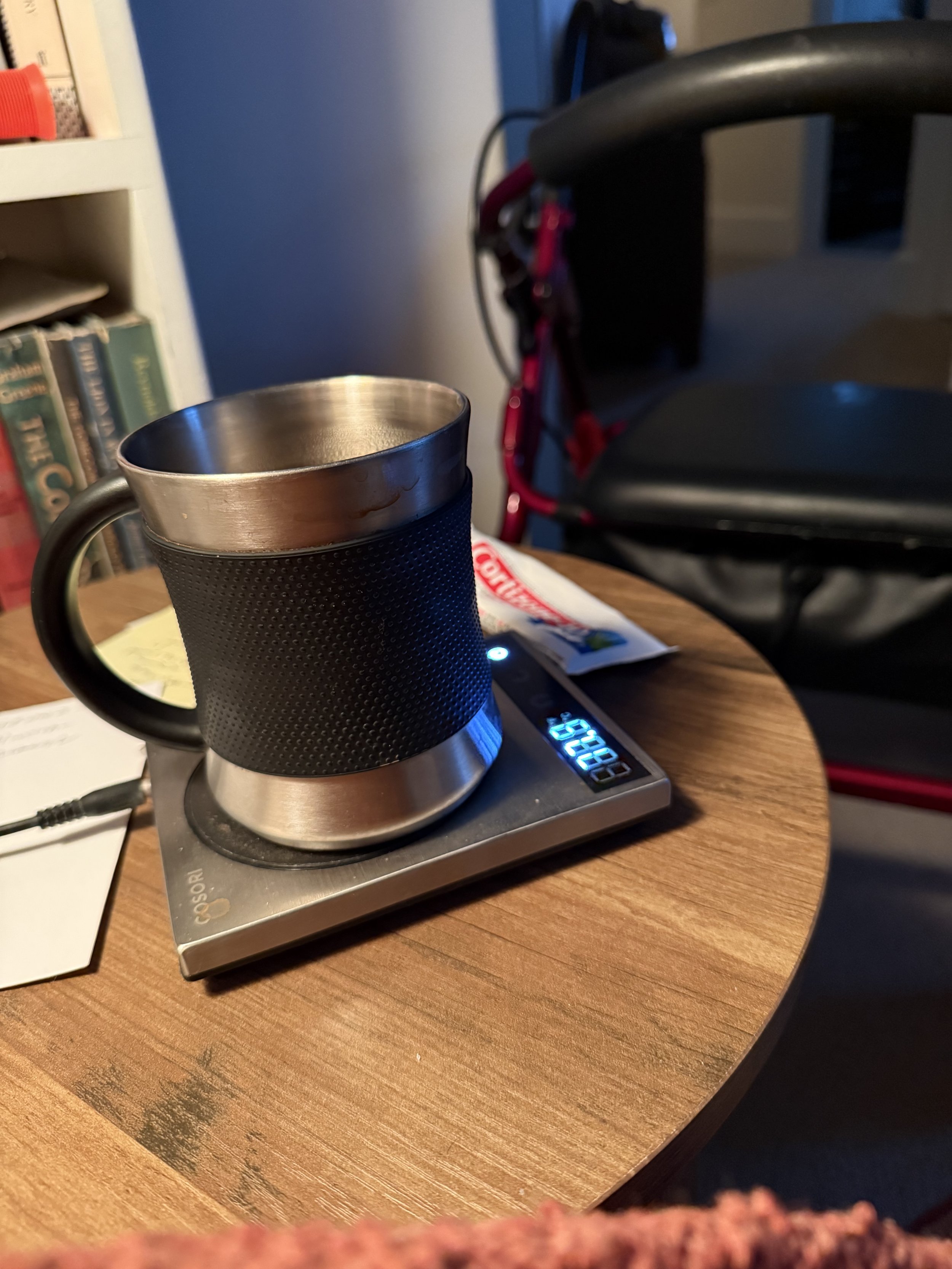
It’s early morning and Jerry’s in there making coffee, one of my few pleasures. I wish I could say just being alive is a pleasure, but not much lately. Almost all movements hurt. I can’t do simple exercises. My legs are beginning to look like sticks, my spotted belly hangs languidly. I used to be pretty. Seriously. Beautiful, in fact.
There’s this rash. And the pain from my back surgery has gone on, well, let’s see, nine months. You could also include the months I hurt pretty fiercely before the surgery. In the meantime, I had a minor surgery to cement a vertebra that cracked. Everything has been tried. I’ve had cortisone shots in various places. I’m about to have an epidural. I have a lot of hope there.
I have a lot of hope in general, which I sprinkle out in small portions, like spice. I guess that’s the nature of living: you don’t give up until you do. I don’t at all feel like giving up. I feel like revving up my brain once again to solve the problem of me.
The problem of me has been interesting. When I was young, it was the problem of our parents and how they got the way they were. Then it was the problem of my marriages; then it was the problem of my aging, how to manage the various pains. By manage, I mean “Live with” as if they weren’t there, as if I had conquered them.
When I was going to sleep last night, there was a stink bug climbing the Venetian blinds. I find them repellent, but Jerry wasn’t ready for bed yet, so I just dozed off waiting for him to come rescue me. Even at 86, he does his best.
We each have walkers. That’s how it is. We crash into each other. We try to remember to lock them in place. I hope that my walker is temporary, but am pretty sure Jerry’s is permanent. What you don’t want is to bend over the handlebars so far that you have a permanent stoop. What you don’t want is to hunch so that you have to lean upward, your neck a periscope.